The collective writing session is embedded within WP4 and is specifically connected to the thematic focus of Task 4.1.1 Health, gender, and sexuality. It touches on sensitive topics that raise questions for researchers about access to the field and, more broadly, how subjects related to the body, intimacy, vulnerability, and sexuality can be represented.
In this workshop, we will explore the limitations and challenges encountered in writing about the body, particularly with regard to issues of sexuality, intimacy, and private choices that elude verbal expression and resist observation. This involves confronting three dimensions—materiality, intimacy, and ethics—that impose constraints on ethnographic description and prompt us to think critically about our research practices.
This will involve examining the ethical and legal issues related to both the collection of statements about the body, illness, and sexuality and the restitution of these statements. It will also involve reflecting on the vocabulary used to describe the inexpressible (sensations, intimacy, etc.); the tension between language that objectifies and subjective bodily experience; and the risks of stigmatization or, conversely, political and ideological reappropriation linked to the verbalization of bodily states.
This programme will take place exclusively in Italy during the summer of 2028, hosted by the Università degli Studi del Piemonte Orientale.
Programme leaders: Nicoletta Diasio, University of Strasbourg – LinCS (UNISTRA) and Francesca Zaltron, University of Eastern Piedmont – LabSIA (UPO)
This first area analyzes life courses and ages in their interconnection with gender assignments, identifications, and negotiations, particularly in the fields of health and sexuality. The relationship between age, gender, sexuality, and health will be explored at different stages of life, particularly during existential transitions, which are moments particularly conducive to forms of “call to order” and reassignment, as well as negotiation and questioning of social norms defining what is age- and gender-appropriate.
The work carried out in this area will also examine the combined impact of age, gender, and sexuality on the experience of acute and chronic illnesses, conditions of vulnerability, and care trajectories. It will also study how these different factors interact in care and treatment practices, as well as in the context of professional life.
The medicalization of age and gender, particularly in the management of variations from what is considered appropriate in a given context, will be studied in particular (for example, in the case of chromosomal variants influencing growth or the appearance of secondary sexual characteristics). We will also examine how those affected negotiate their position and point of view with health professionals and other social actors.
We will explore the sexual and reproductive health of individuals in countries in the Global South and North, examining the similarities and differences between these contexts. This analysis will focus on access to contraception and voluntary termination of pregnancy (abortion) in countries in the “South,” which often involve human rights groups and, more recently, feminist movements operating in sometimes repressive legislative frameworks, as well as in countries in the "North " (e.g., in Italy, where the exercise of the right to abortion is often made impossible). We will observe how various rights movements manifest themselves in the form of emancipation movements, drawing on arguments related to bodily autonomy, equality, and the questioning of age-related processes of inferiorization.
This programme can take place in Colombia (PUJ, ICSI), France (Univ. Lorraine, Univ. Strasbourg, UMLP), Italy (Univ. Piemont Oriental, Univ. Parma), Ethiopia (CFEE), Togo (INSUCO Togo), Madagascar (INSUCO Mada) and Canada (UDEm), in January and June 2026 and January and June 2027.
Programme leaders: Nicoletta Diasio, University of Strasbourg – LinCS (UNISTRA) and Francesca Zaltron, University of Eastern Piedmont – LabSIA (UPO)
The Programme focuses on interdisciplinary and participatory approaches to social research, combining training in existing methodologies with the co-construction of innovative research tools. At its core is a collective mobility hosted at the University of Parma (late May–June 2027).
Over two weeks, participants will first acquire the theoretical foundations of and experiment with methods, such as PhotoVoice, World Café, Community Circles and narrative walks and other, while also addressing the ethical, emotional and relational dimensions of participatory research. In the second phase, participants will apply these methods in real-world settings, in partnership with local associations (senior centres, youth forums, health services), followed by collective data co-analysis and creative dissemination.
This programme will take place only in Italy, between May and June 2027, hosted by Università degli Studi di Parma.
Program leader: Francesca Maci, Università di Parma
This program invites researchers and professionals to learn about participatory and collaborative methods through individual and/or collective fieldwork, academic events, participation in seminars and/or ongoing research projects, with the guidance of researchers from the Department of Anthropology of Pontificia Universidad Javeriana and ICSI.
The arrangement of each specific secondment will be agreed upon with each visiting person, taking into account their area of expertise and specific skill set, as well as the activities planned at each institution for the period in question.
Most activities require a high level of Spanish.
Program leaders: Monica CUELLAR GEMPELER, Pontifica Universidad Javeriana and Jeanette MORENO, ICSI Bogota
Between knowledge produced by writing and knowledge produced by images, continuity is not achieved without hiccups. Thus, sociological and/or anthropological reflection based on images and sequences differs from sociological and/or anthropological reflection based on words and sentences.
Our aim is to promote methods of investigation and interpretation based on still images (photographs, drawings) or moving images (films) and sound recordings, in order to analyse the process of construction.
This programme will take place only in France, at Université de Lorraine (Nancy) and Université de Strasbourg (Strasbourg).
As part of WP2, which aims to take a cross-cutting approach to the use of innovative participatory methods for working with specific vulnerable populations by examining the effects of these innovative methods, their contributions and limitations, as well as the conditions for their success, Task 2.2, “Data Co-construction Techniques: combination and innovation" focuses on training participants in various data collection methodologies and techniques and how to combine them to address social issues.
The mobility program 2.2.1 organized by Insuco Togo offers participants the opportunity to engage in the application of data collection methods, geographic information systems, and cutting-edge approaches to the study of social impacts as applied in projects led by Insuco. It thus covers crucial areas of innovation in working with human-related data and complements the training activities planned under points 2.2.2 on audiovisual methods, 2.2.3 on participatory methods, and 2.2.4 on group training in participatory research with vulnerable populations.
As the ultimate form of communication, art is a central part of who we are. It represents a universal language that transcends verbal language and allows human beings to communicate their emotions and experiences.
Art-based therapies are rapidly developing in medical institutions, specialized care centers, medical-educational facilities, and more. They are now recognized as a genuine complementary treatment to other therapies because, through the creative process, they provide relief and revitalization to people with disabilities.
The art therapy training :
- Art therapy training is provided within the Master 2 Adapted Physical Activities program between October and December (See link below).
- A special Art Therapy training course will be held at the University of Strasbourg from 24 May 2027 to 28 May 2027 (the only dates confirmed at this stage). Those wishing to take part in this programme will need to plan their travel arrangements around the course dates.
- Colleagues will also be involved in the work of the Interdisciplinary Thematic Institute “Literature, Ethics & Arts” (Lethica)
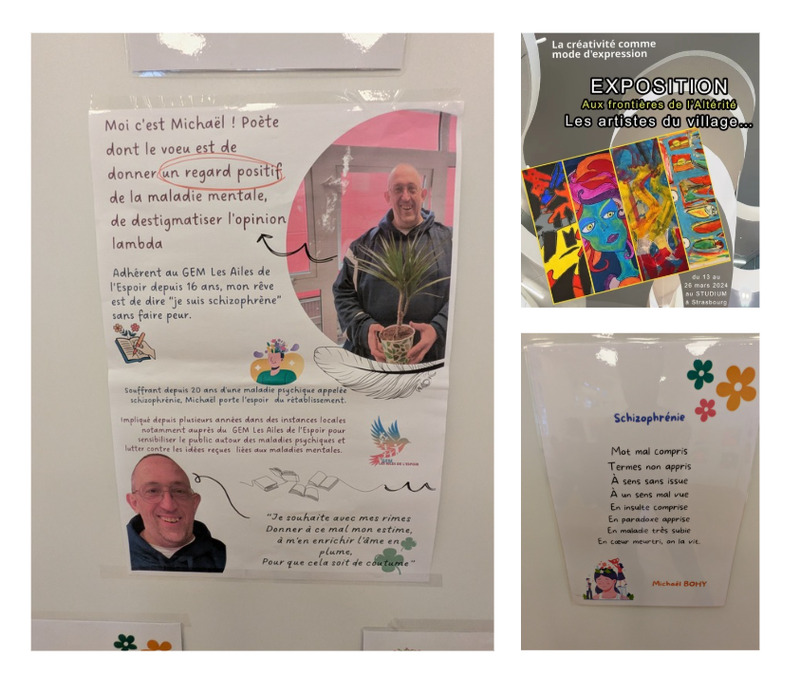
- In collaboration with APAJH Alsace and “Collectif le Village”, we organize an annual exhibition (May) in Mulhouse with artists with disabilities. Meetings can be arranged with specialized institutions and artists during the stay in Strasbourg.
This course will be delivered in French only, so participants will need to have a sufficient level of French to attend.
The course dates for 2028 are not yet available.
As part of this programme, participants will learn how the science communicators from the Ethnoart association convey anthropological knowledge and methods to audiences with no prior background in the subject.
1. We will offer observation opportunities: attending workshops at our various partner organisations to meet the different audiences we engage with in a range of contexts, such as educational, cultural and social settings. Following this initial phase, we may organise co-facilitated sessions if participants wish to play an active role in science communication.
2. We will organise training sessions at our premises to present: the methods used by our outreach facilitators; the themes on which we base our content; and the specific challenges of science communication in the humanities and social sciences.
3. In autumn 2026, we will organise a festival (subject to securing funding from the City of Paris and the Île-de-France Region) entitled ‘Cultures en Mouvement’ on the following themes: migration, social sciences and artistic practices. It will take place near ethnoArt’s premises at a partner organisation: La Maison des Réfugiés.
This programme will take place only in France, from Septemper 2026 to September 2029, hosted by Ethnort.
The goal is a collaborative project based on artistic approaches to intergenerational transmission. All participants are invited to reflect on how to explore this theme locally by creating or testing artistic tools and methodologies, even if only as an exploratory exercise. The aim is to document our experience through a reflective and creative lens.
This program takes place within the framework of WP2, led by Mónica Cuéllar Gempeler and Marie-Pierre Julien. During the mobility month, weekly hybrid meetings will be organized to discuss the progress of the work with interested individuals, including those from WP2, even if they are not in Togo. The goal is to work in pairs or trios, following a specific line of inquiry or engaging in a shared artistic practice, to produce exploratory results that can be reused in future fieldwork planned within the other WPs.
This programme will take place only once in Togo, in February and March 2026, hosted by INSUCO Togo.
Institution:
Université de Strasbourg, Laboratoire interdisciplinaire en études culturelles (LinCs) in Strasbourg (France)
Areas of expertise:
Body, illness and health
Disabilities, social treatment and comparisons
Leisure, Adapted Physical Activities and Health and tourism
Africa and Europe: 19th–21st centuries
Minorities
Publications & projects: -
Institution:
Université Joseph Ki-Zerbo, Laboratoire Genre et Développement in Ouagadougou (Burkina Faso)
Areas of expertise:
Work and Organisational Psychology
Publications & projects:
Ngueutsa, Robert, et al. « L’activité de téléopération dans le démantèlement des installations d’une industrie nucléaire : analyse du dispositif technique et des enjeux organisationnels et humains. » Humain et Organisation, volume 8, numéro 2, 2024, p. 53–68. https://doi.org/10.7202/1111857ar
Laurent Auzoult, Robert Ngueutsa, "Attitude to safety rules and reflexivity as determinants of safety climate", Journal of Safety Research, Volume 71, 2019, Pages 95-102, ISSN 0022-4375,
https://doi.org/10.1016/j.jsr.2019.09.016.
Dongo Rémi Kouabenan, Robert Ngueutsa, Safiétou Mbaye, "Safety climate, perceived risk, and involvement in safety management", Safety Science, Volume 77, 2015, Pages 72-79, ISSN 0925-7535, https://doi.org/10.1016/j.ssci.2015.03.009.
Institution:
Université de Strasbourg, Laboratoire interdisciplinaire en études culturelles (LinCS) in Strasbourg (France)
Areas of expertise:
Sociology, anthropology, the body, health, illness, technology-assisted care, life stages.
Publications & projects:
LivACT - Living and Ageing with Chronic Conditions and Technological Devices, ANR PPR Autonomie, 2025-2029 (coord. L. Dalibert)
INNOVCARE - L’innovation tirée par le care : le cas des soins aux personnes âgées en France et au Japon, ANR PPR Autonomie, 2025-2029 (coord. S. Lechevalier)
PASMAC - Passages d’âges et maladie chronique : les trajectoires de soins des 12-21 ans atteints de diabète de type 1 ou d’asthme, IRESP / Inserm, 2017-2021 (coord. V. Vinel)
Institution:
Centre Nationale de la Recherche Scientifique (CNRS), Centre français des études éthiopiennes (CFEE) in Addis Ababa (Ethiopia)
Areas of expertise:
European project management; Public policy and institutional analysis; Research and innovation
Publications & projects:
Contribution to various types of Erasmus+ projects including strategic partnerships (KA2), youth exchanges (KA1), Short-term mobility projects (KA1)
Institution:
Université Marie & Louis Pasteur, Laboratoire de Sociologie et d'Anthrologie (LaSA), Besançon (France)
Areas of expertise:
Life stages at the intersection of health, family and care.
Publications & projects:
2025 – 2026, Accepter et résister aux aides. Avoir 75 ans et plus en ville et à la campagne (ARA), IRESP/CNSA, AAP Autonomie aide au montage de projet, Partenaires : Promotion santé Bourgogne-Franche-Comté et Pôle de gérontologie et d’innovation Bourgogne-Franche-Comté.
2022 – 2023, Âge adulte : représentations et trajectoires individuelles. Une enquête auprès de trentenaires et quarantenaires en France, appel à projet Chrysalide, Université de Franche-Comté.
2019, Arrière-grands-parents : quelle place au sein de la parenté et dans le système des âges de la vie ?, appel à projet Chrysalide, Université de Franche-Comté.
Institution:
Institute for Social Research in Africa (IFSRA) in France
Areas of expertise:
Migration & Development Studies
Publications & projects:
PhD thesis 2021 « Identité, Pouvoir, Négociations : Les People of Indian Origin en Afrique de l’Est »
Institution:
University of Eastern Piedmont (UPO) – Department of Law and Political, Economic and Social Sciences (DIGSPES), Italy – Alessandria
Areas of expertise:
Sociology of health and illness; gender; health inequalities; organisation of socio-health services; experiences of illness; ageing and ageism in healthcare; public health protection within a One Health perspective.
Publications & projects:
Age-It – Ageing Well in an Ageing Society (PNRR), Spoke 7 – Cultural and Political Dimensions of Ageing Societies, Task 4 – Ageism, Prejudice and Discrimination. (2023–2026)
PRISMA – Participation and Integration of Migrants in Small and Medium Towns: analysing access and accessibility to social and health services through structures, networks and narratives (PRIN PNRR 2022 – National Research Projects of Relevant Interest, Ministry of the Interior) (2024–2026)
Migrant children’s participation and identity construction in education and healthcare (PRIN 2017 – MIUR) – participation of migrant children in educational and healthcare contexts, with a focus on the management of chronic illnesses at school (2019-2023)
Institution:
Université de Strasbourg, Laboratoire interdisciplinaire en études culturelles (LinCS) in Strasbourg (France)
Areas of expertise:
Sociology, anthropology, life stages (childhood, adolescence, ageing), gender, family, kinship
Publications & projects:
Passages d’âges et maladie chronique : trajectoires de soins des 12-21 ans atteints de diabète de type 1 ou d’asthme (PASMAC) 2017-2021
https://lasa.umlp.fr/le-laboratoire/membres-du-laboratoire/membres-associes/virginie-vinel/
Frères, sœurs et situations de handicap au long du parcours de vie – 2025-2027 – financement Caisse Nationale d’Allocation familiale Université Marie et Louis Pasteur/Université de Strasbourg
FAPE · Familles d’accueil et parcours des enfants de l’aide sociale à l’enfance
2021-2024 - Recherche financée par la Région Bourgogne Franche-Comté UMLP
Institution:
Addis Ababa University, Institute of Ethiopian Studies in Addis Ababa (Ethiopia)
Areas of expertise:
My work brings together life courses, ageing and the sociology of work, and focuses on corporate practices that respond to moral imperatives.
Publications & projects: -
Institution:
Centre Nationale de la Recherche Scientifique (CNRS), Centre français des études éthiopiennes (CFEE) in Addis Ababa (Ethiopia)
Areas of expertise:
My work brings together life courses, ageing and the sociology of work, and focuses on corporate practices that respond to moral imperatives.
Publications & projects: -
Institution:
Pontificia Universidad Javeriana, Departamento de Antropología in Bogota (Colombia)
Areas of expertise:
Ethnographic writing and methods, anthropological theory and psychological anthropology.
Publications & projects: -
Institution:
Université de Lorraine, Territoire Travail Age et Santé (TETRAS) in Nancy (France)
Field of research:
Body (rites of passage and gender, processes of subjectivation), Food practices, Material cultures (know-how, transmission and consumption)
Publications & contributions:
ANR ChiBarAPS Chirurgie bariatrique au regard des APS, responsable scientifique S. Ferez, AAP-G-2023 (CE41). Co-responsable de l’axe 1 perception des transformations corporelles et travail sur soi (rédaction de 3 livrables) 2024-27.
Membre de la Mission Droit et Justice « Repenser les modalités de détermination de l’âge des mineurs étrangers non-accompagnés. Perspectives empiriques et comparées » ss la dir. de F. Jacquelot, CERCRID, Université Jean Monnet, St-Etienne, UFR Droit 2020-23.
Responsable scientifique VAFAM Se vêtir à l’adolescence France/Angleterre/Maroc, recherche conduite par EA3478-2L2S, Université de Lorraine, Marie-Pierre Julien, Department of Anthropology UCL University college London Myriem Naji et LaSA (Université de Franche-Comté) Virginie Vinel. Avec la participation de Camille Morville (en master 1 PRIS, Nancy). 30 entretiens semi-directifs : Maroc (Tiznit), France (Strasbourg et Nancy : centre-ville et périphérie), Londres (Woolwish).
Issue de la transformation de l’université de Franche-Comté et de la COMUE UBFC en Établissement Public Expérimental (EPE), elle fédère deux établissements composantes partenaires historiques, l’UTBM et SUPMICROTECH, et six établissements associés, le campus Arts et Métiers de Cluny, le CHU de Besançon Franche-Comté, le CROUS Bourgogne Franche-Comté, l'Établissement Français du Sang Bourgogne Franche-Comté (EFS BFC), L'École Supérieure des Technologies et des Affaires à Belfort (l’ESTA) et l'Institut Supérieur des Beaux-Arts de Besançon (l’ISBA).
L’Université Marie et Louis Pasteur vise à renforcer l’attractivité de ses formations et l’inclusion de ses étudiants, à consolider son excellence académique et scientifique, à développer des partenariats socio-économiques innovants, tout en affirmant son ancrage territorial et son rayonnement national et international.
Avec plus de 30 000 étudiants et agents dont 2 000 enseignants-chercheurs, elle s’appuie sur une administration innovante et des synergies renforcées pour relever les défis académiques, scientifiques et sociétaux d’aujourd’hui et de demain.
The CNRS (France), through the French Center for Ethiopian Studies (Addis Ababa, Ethiopia), as the project coordinator, will be responsible for WP1.
The French Center for Ethiopian Studies (CFEE), UAR3137, is a joint unit of the French Institute for Research Abroad (IFRE) of the French Ministry for Europe and Foreign Affairs (MEAE) and the National Center for Scientific Research (CNRS / INSHS). Based in Addis Ababa, it builds on nearly a century of Franco-Ethiopian scientific cooperation. The PAGENS project falls under the CFEE’s Research Area 3, focusing on contemporary transformations in the Horn of Africa, and intersects with the cross-cutting themes of Gender and Heritage.
Given the CFEE’s thematic and methodological expertise in history, geography, and sociology, the center will play a key role in WP5, led by Constance Perrin-Joly, the project leader. The CFEE-CNRS offers a mobility program dedicated to artistic approaches, in collaboration with Insuco Togo (Program 2.1.1), and a program on visual approaches applied to migration research with the AAU-IES (5.2.1).